

On Wichita State University Week: Should we change the way we think about using generative AI for learning?
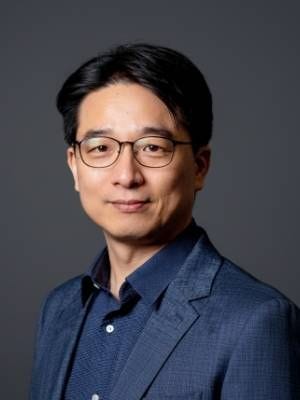
JaeHwan Byun, associate professor in the College of Education, explores this question.
Faculty Bio:
Dr. JaeHwan Byun is an Associate Professor in the School of Education, College of Applied Studies at Wichita State University. He joined WSU in 2015 and currently serves as Program Chair for the Master of Education in Learning and Instructional Design and Director of the Applied AI in Education Research Lab. Dr. Byun’s work focuses on how educators and learners can engage in learning experiences that are engaging, infused with meaning, and experienced as coherent and complete. Building on longstanding work in educational technology, his current scholarship foregrounds generative AI (GenAI) in education, including studies of teacher adoption and needs, design-based approaches to educator preparation, and how GenAI can function as “design material” that reshapes instructional activity and learning paradigms.
Transcript:
Today, many see GenAI as a quick tool to get answers. A shortcut. This view misses its real potential and leads to widespread concerns about cheating and shallow learning.
My research, conducted with my colleague Dr. Mara Alagić, proposes a new paradigm called Generativism. We argue that real learning with GenAI isn’t about the answer it gives you. It’s about the cognitive work you do with that answer.
We define this deep learning in a cycle: You prompt. The GenAI generates. And then, the most important part begins: the critique.
That critique then becomes a new prompt to ask GenAI. This process iterates, until you and the AI build a refined learning outcome. This is a moment of critical reflection followed by action.
The GenAI acts as a partner that challenges your thinking. Your job isn’t to simply accept its answer. Your job is to question it, validate it, and refine it. That reflective, iterative process is the learning in the era of GenAI.
This process creates a dynamic learning space. The AI provides a “scaffold” that pushes you just beyond what you already know. In this model, the GenAI isn’t a simple tool. It’s a semi-autonomous partner and collaborator.
Therefore, the learner cannot be a passive receiver. They must become the orchestrator of this complex process.
The “ah-ha” moment is this: The true goal of GenAI in education is not to deliver information. It is to provoke the critical reflection and deep engagement needed to build real, lasting understanding.
For the younger generations who will inevitably live with this technology, this means teaching them how to think critically is more important than ever.
Read More:


