

How do children learn to talk about themselves and other people?
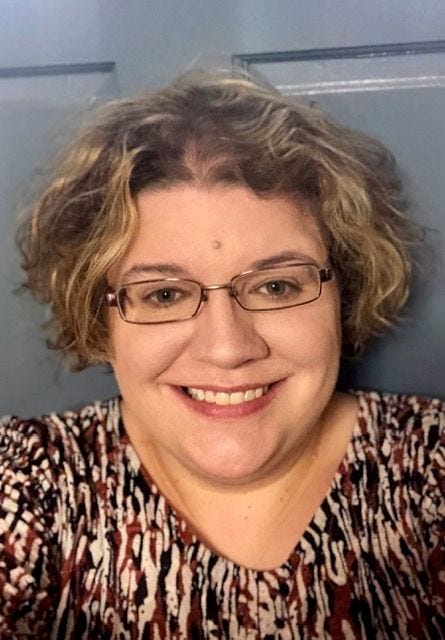
Erin M. Kenney, assistant professor of psychology at Hartwick College, looks into this using preschool-aged children.
Faculty Bio:
Erin M. Kenney is an assistant professor of psychology at Hartwick College in Oneonta, New York.
Dr. Kenney’s interdisciplinary work includes time as an early childhood teacher, administrator, professor, and researcher. Her areas of expertise include developmental psychology, early childhood education, parent-child conversation.
Kenney’s dedication to bridging the gap between developmental science and developmentally appropriate practice includes a commitment to research practices that center participants as knowledge producers and values community engagement. She and the members of the Family and Developmental Studies Research Lab study a variety of topics including parent-child conversation, neurodiversity, and personal intelligence.
She earned her B.S. from the University of New England and her M.Ed. from the University of Hartford. She earned her M.A. and Ph.D. in developmental psychology from the University of New Hampshire.
Transcript:
We live in a world in which people are constantly judging other people.
My research seeks to understand how kids learn to talk about others by investigating parent-and-child conversations. I am interested in the influence that a parent’s own personal intelligence has on a child’s development of personal intelligence, often described as the capacity to reason about personalities, both one’s own and those with whom we come into contact.
Parent/child conversation research has existed for decades, but the act of including personal intelligence is brand new. It is all about understanding how children truly understand or interact with people, situations and other things that are different or similar to themselves.
Our work is aimed at better understanding how kids develop the ability to describe other people using personality trait terms. They’re asked to have a conversation with their parent describing recent positive and negative interactions with a peer or friend. How do they build that skill set to make those determinations of what a good or bad friend is?
The reason I went with three and four-year-olds is I used to be a preschool teacher. I understand that three- and four-year-old kids are very concerned with who’s doing the right thing, who’s doing the wrong thing. They’re also very much learning how to describe themselves and how to talk about other people--and my big question is: What are the mechanisms that underlie that?
It appears that parents have a huge role in terms of how children learn to talk about the world around them and our interviews reveal that most parents seem to be trying to do the best they can. Through this research, we can gain insights that may be able to help society understand how to better shape future generations to be less divisive and better able to label and understand personality related behavior.
Read More:


