

On University of Miami Week: Can AI bridge the mental health equity gap for Hispanic youth?
Willy Prado, distinguished university professor of nursing and health studies, public health sciences, and psychology, explores the possibilities.
Faculty Bio:
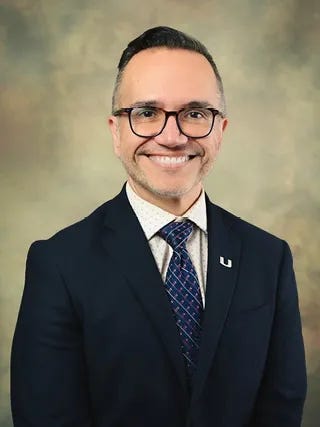
Guillermo (Willy) Prado is professor of Nursing and Health Studies, Public Health Sciences, and Psychology at the University of Miami. He is a pioneer in health disparities and behavioral interventions for the prevention of substance use, sexual risk behaviors, obesity and mental health in Hispanic families.
He has received approximately $20 million of continuous NIH and CDC funding since his doctoral studies (including approx. $1 million dollars/year of active funding) as PI and over $100 million as Co-I, mentor, or collaborator. His research has led to over 190 peer-reviewed articles and chapters. His h-index is 48 and the average number of citations per year in recent years is over 800, speaking to the impact of his work on the field.
Prado’s scholarship on family-based preventive interventions and Hispanic adolescents is internationally recognized. At the time that Prado and his colleagues began developing family-based preventive interventions for Hispanics, there were no such interventions for this population. For significantly advancing knowledge in the behavioral interventions, health disparities, and adolescent health literature, he has received numerous awards and honors, including the Lifetime Achievement Award from the National Hispanic Science Network; the Community, Culture, and Prevention Science Award from the Society for Prevention Research; and election to the prestigious National Academy of Medicine. His research has been featured in multiple media outlets including the Miami Herald, NBC, Univision, and CNN en Español. He has also been invited to serve as a witness to the U.S. House Select Committee on Economic Disparities and Fairness in Growth to speak about prevention science and health disparities.
In addition to research and scholarship, Prado has a strong commitment to teaching and mentoring. In addition to his well-funded research program and his administrative responsibilities since arriving at University of Miami in 2007, Prado has taught courses in prevention science, research methods, professional development, and biostatistics. In recognition of his teaching, Prado received the inaugural faculty teaching award in the Department of Public Health Sciences awarded by the Public Health Student Association.
Prado is also dedicated to mentoring and training the next generation of prevention and health disparities scientists, particularly those who identify as underrepresented minorities (URM). In fact, more than 90 percent of his doctoral mentees in the past 10 years have been URMs. All his doctoral mentees have pursued careers in research, academia, and industry. His post-doctoral fellows have all successfully pursued faculty positions upon completion of their post-doctoral training and all his post-doctoral fellows have received NIH K awards and/or R01s within 18 months of completing their fellowship with him. Prado has been the recipient of mentoring awards including the award for mentoring early career preventionists from the Society for Prevention Research and the Presidential Award of the Florida Education Fund for his commitment to training underrepresented minorities.
Prado served as interim provost and executive vice president for academic affairs, and previously as vice provost for Faculty Affairs and dean of the Graduate School. He previously served as the founding director of the Division of Prevention Science and Community Health, director of the Epidemiology Division, and director of the PhD program in Epidemiology in the Department of Public Health Sciences at the Miller School of Medicine. He is former associate editor of Prevention Science and the immediate past president of the Society for Prevention Research, an organization of more than 800 prevention scientist, practitioners, and policy makers. Currently, he is on the executive committee of the Academy of Science, Engineering, and Medicine of Florida; and on the board of directors of Research!America, a non-profit medical and health research advocacy alliance, whose board of directors consists of former secretaries of Health and Human Services, former NIH directors, the president of the National Academy of Medicine, the president & Chief Executive Officer of the American Association of Colleagues of Nursing, and other health leaders and policy makers.
Transcript:
Hispanic adolescents face significant systemic barriers to mental health care, ranging from limited access to insurance to cultural stigma surrounding treatment. Yet, even as these challenges persist, effective solutions are within reach. When families are equipped with the right tools and support, parents are uniquely equipped to play a powerful role in promoting their adolescent’s mental health and well-being.
For more than two decades, with vital funding, our team developed and rigorously tested Familias Unidas, a culturally grounded, family-based intervention designed to empower parents and strengthen parent-adolescent relationships. By helping families improve communication, build trust, enhance parental involvement, and develop effective monitoring skills, Familias Unidas empowers families to create healthier, more supportive home environments. Through multiple clinical trials, we proved that strengthening family functioning significantly reduces risk behaviors and improves adolescent mental health outcomes.
But research only transforms lives when it reaches the communities who need it most. While we’ve successfully implemented Familias Unidas in communities locally, nationally and internationally, expanding access remains a critical priority. That’s where AI offers an unprecedented opportunity. With ongoing funding and support, we’re pioneering AI-powered digital therapists that can guide family sessions, facilitate more constructive conversations and provide personalized guidance that strengthens family relationships in real time. This work showcases the transformative power of research funding: taking interventions proven through decades of scientific research, combining them with innovative technology, and making evidence-based family mental health support accessible to families wherever they are.


