

How do we get better outcomes at lower cost for preschool children?
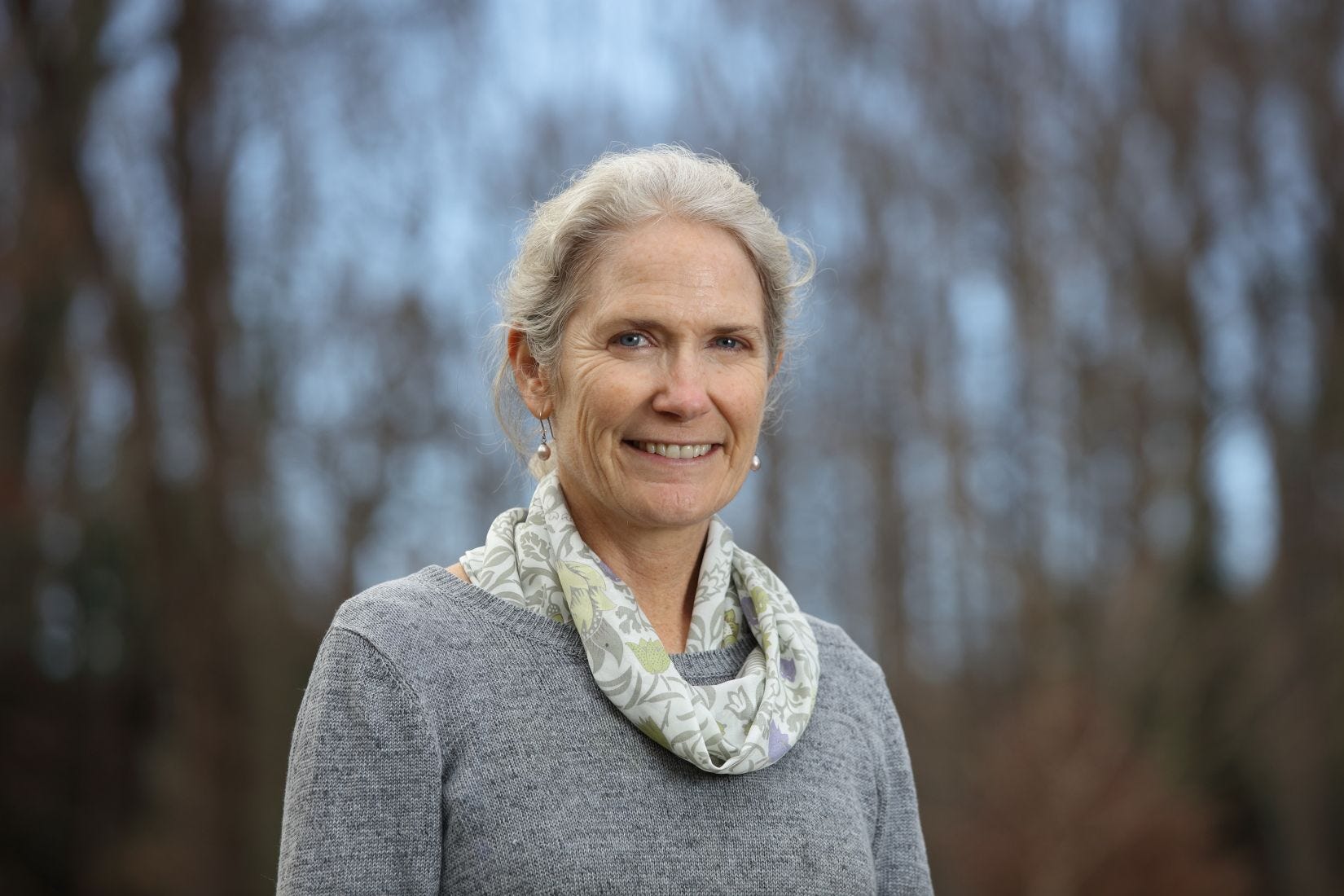
Angeline S. Lillard, Commonwealth professor of psychology at the University of Virginia, explores one option.
Faculty Bio:
Angeline S. Lillard is the Commonwealth Professor of Psychology at the University of Virginia where she directs the Early Development Laboratory and the Montessori Science Program; her research focuses on children’s play and Montessori education. She is an elected Fellow of the American Association for the Advancement of Science, the American Psychological Association, and the Association for Psychological Science, and Chief Editor of Frontiers in Developmental Psychology. She received her PhD in Psychology from Stanford University in 1991, and the American Psychological Association’s Boyd McCandless Award for her early career contributions to Developmental Science. Her book, Montessori: The Science Behind the Genius (Oxford University Press) received the Cognitive Development Society Book Award, is translated into several languages, and is currently in its 3rd edition. She has been keynote speaker at dozens of Psychology and Montessori conferences worldwide. Her research has been funded by the Institutes of Education Sciences, the National Science Foundation, the National Institutes of Health, and many private foundations.
Transcript:
Preschool has been around for over a century, but we can't seem to settle on the best models to use--entirely free play, or dive into academics. New research shows the Montessori method yields better outcomes at lower cost.
The study followed for 3 years 588 children who had entered a random lottery for a seat at one of 24 public Montessori schools across the country. About a third won a spot, and the rest were waitlisted. The children were no different on outcomes at baseline when they started pre-K, nor were they different at the end of PK3 or PK4. But at ages 5-6, several differences emerged, and the effects were large. First, children who attended Montessori were better readers; specifically, a child who would have scored at the 50th percentile in reading at a traditional school would have scored at the 71st percentile had they attended Montessori. Children who got into Montessori also had better executive function, short-term memory and social understanding at the end of kindergarten. And the cost savings were $13,127 per child as compared to traditional PK3 through kindergarten programs--a savings that would really add up across all the 3- to 6-year-olds in a district. This is not the first study to show better outcomes from Montessori--other randomized controlled trials (RCTs) and two meta-analyses done in 2023 all come to the same conclusion.
Why isn't there more of this model? One reason may be that there are many poor exemplars. Real Montessori has 3-year age groupings, and teachers give children structured lessons on how to use hundreds of hands-on materials Dr. Maria Montessori and her collaborators developed to convey learning, and then children freely explore those materials with their peers, without grades, and without teachers dictating their schedules. Bridging play and work, the public Montessori preschool model yields better outcomes, at lower cost.
Read More:


