How space are designed can lead to longer wait times for some.
Lawrence Chua, associate professor of Architectural History at Syracuse University, explores why.
Faculty Bio:
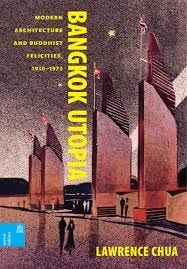
Lawrence Chua is a historian of the modern built environment with an emphasis on the trans-regional histories of Asian architecture and urban cultures. He is the author of Bangkok Utopia: Modern Architecture and Buddhist Felicities, published in the University of Hawai’i Press’ Spatial Habitus series in 2021. His current research project, “Untimely Interventions,” investigates the ways modern architecture structured colonial and nationalist perceptions of time and sovereignty in Thailand, Cambodia, and Laos from 1893 to 1958. The study frames modern built-forms as “chronopolitical infrastructure”—material sites where the historical consciousness and territorial logic of empire were actively constructed. Through archival and field-based research, it examines temples, museums, monuments, and exposition pavilions as mediated structures through which colonial powers and indigenous regimes shaped national imaginaries. Dr. Chua is also writing a history of “mid-century modern” architecture from the perspective of the 1955 Afro-Asian Conference at Bandung and editing a collection of translations of primary source documents from the early history of the architectural profession across Asia. Dr. Chua’s scholarship has also appeared in the Journal of the Society of Architectural Historians, October, the Journal of Urban History, Fabrications, the Journal of Architecture, Traditional Dwellings and Settlements Review, and Southeast of Now. He currently serves on the editorial board of the Journal of the Society of Architectural Historians. He is co-editor of the ArchAsia book series for Hong Kong University Press. He also serves as co-chair of the Race and Architectural History Affiliate Group of the Society of Architectural Historians.
Dr. Chua was most recently a scholar in residence at the Center for Southeast Asian Studies, Kyoto University. He has been a Marie S. Curie Junior Fellow at the Freiburg Institute for Advanced Studies at the Albert-Ludwigs-Universität and a research fellow at the Getty Research Institute, the Center for Khmer Studies, and the International Institute of Asian Studies at Universiteit Leiden. At Syracuse University, he teaches courses in the histories of global modern architecture, Chinese architecture, Buddhist architecture, postcolonial utopias, and monuments, memory, and melancholia. As a Faculty Fellow in the Special Collections Research Center 2024-2025, he developed a course on the spatial histories of LGBTQ+ communities in Syracuse. Dr. Chua has taught courses in the history and theory of architecture and urbanism as well as studio courses at Hamilton College, New York University, and Chulalongkorn University. He received his PhD in the History of Architecture and Urban Development from Cornell University in 2012. In addition to his scholarship and teaching, he is a founding board member with the artists Julie Mehretu and Paul Pfeiffer, of Denniston Hill, a not-for-profit arts center.
Transcript:
What if power isn’t just exercised through space—borders, buildings, highways—but through time itself?
Take an airport terminal. Its long corridors are designed around an ideal walking speed. Security checkpoints create waiting as an architectural condition—ropes, scanners, holding areas. Departure gates synchronize passengers to global time zones, while detention rooms and passport control stretch time into hours or days for others. And from above, the control tower coordinates it all.
This is chronopolitical infrastructure: architecture that organizes who moves quickly, who waits, and whose time is valued. The same building can accelerate executives through priority lanes while slowing migrants, service workers, or asylum seekers through layered delays.
During the twentieth century, architects and planners increasingly designed buildings around political timelines—speed, efficiency, productivity, and development. Those assumptions hardened into concrete, circulation paths, and zoning codes.
Seeing architecture as chronopolitical infrastructure reminds us that time is not abstract, it’s designed. And if time has been designed to serve power, it can also be redesigned to support care, repair, and more just futures.
Read More:
[Taylor & Francis] - Perfecting Siam: Sovereignty, Sacred Space, and Territory at Wat Rachathiwat
[University of California Press] - A Tale of Two Crematoria: Funeral Architecture and the Politics of Representation in Mid-Twentieth-Century Bangkok