


One aggressive form of cancer can be set off by an accident in our cells. How do we fight this?
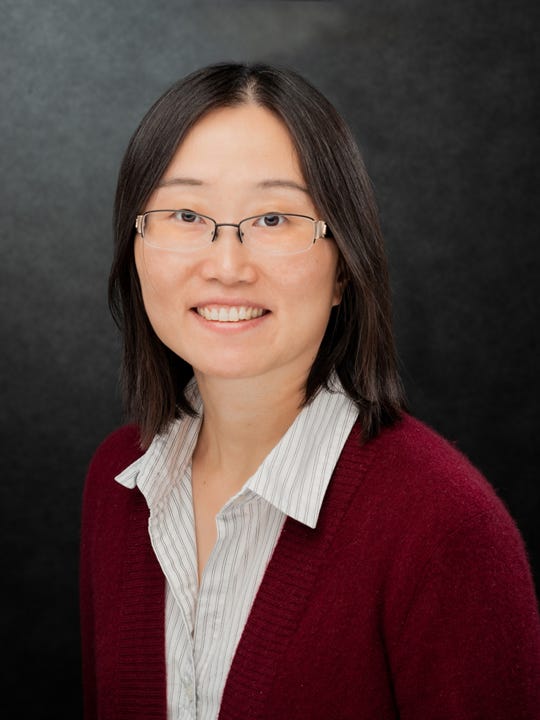
Nancy Huang, professor at the Institute of Biosciences and Technology at Texas A&M University, examines.
Faculty Bio:
Yun (Nancy) Huang, PhD, is a professor at Texas A&M University Institute of Biosciences and Technology and Associate Director of the Center for Epigenetic and Disease Prevention (CEDP) in the Department of Translational Medical Sciences at the Naresh K. Vashisht College of Medicine. A principal investigator on grants from the National Institutes of Health, the CPRIT, the American Cancer Society and the American Heart Association, Dr. Huang’s research focuses on investigating transcriptional regulatory mechanisms that support normal development and on how epigenetic defects contribute to pathological conditions, including aging and cancer. Her work involves advanced understanding of TET enzymes and 5-hydroxymethylcytosine, pioneering tools to study the “sixth DNA base” and its role in gene regulation and disease. As a highly recognized scientist with over 120 publications and numerous awards, Dr. Huang leads innovative studies at Texas A&M’s Institute of Biosciences and Technology, supported by multiple major research grants. She received her medical degree from Zhejiang University School of Medicine and her doctorate in biochemistry from Georgia State University. She completed postdoctoral fellowships at Harvard Medical School and La Jolla Institute.
Transcript:
Sometimes, a single glitch in our DNA can rewrite a cell’s destiny. In one rare and aggressive form of kidney cancer—called translocation renal cell carcinoma, or translocation kidney cancer—two genes that should never touch break apart and fuse together. That tiny accident sets off a biological chain reaction that turns normal kidney cells into unstoppable cancer factories.
This disease mostly affects children and young adults, and one of its key culprits is a gene known as Transcription Factor E3, or TFE3. When TFE3 fuses with another gene, it creates a hybrid called a TFE3 oncofusion—a molecular impostor that rewires how genes are switched on and off. For years, researchers suspected these fusions somehow “supercharged” the cell’s control systems, but the underlying mechanism remained unclear.
Now, scientists led by Dr. Lei Guo, Dr. Yubin Zhou, and Dr. Yun Huang, reports that many TFE3 fusion partners can bind to ribonucleic acid (RNA)—the messenger molecule that carries instructions from DNA.
This RNA-binding ability lets the hybrid protein form microscopic droplet-like structures, known as biomolecular condensates, inside the cell nucleus. Within these droplets, TFE3 oncofusions pull together key gene-activation engines such as RNA polymerase II and paraspeckle component 1 (PSPC1), creating powerful “gene hubs” that drive cancer growth.
Even more remarkably, the team designed a nanobody-based chemogenetic tool that can dissolve these droplets on demand. When they triggered it, the condensates broke apart—and tumor growth slowed sharply in both cultured cells and mice.
By revealing how cancer cells weaponize these tiny droplets, the discovery opens a bold new way to disarm fusion-driven cancers—not by blocking genes, but by melting their molecular engines.
Read More:
[Vital Record from TAMU] - Disrupting cancer’s secret hubs: A new way to halt tumor growth
[EurekAlert!] - Disrupting cancer’s secret hubs: A new way to halt tumor growth


