


On Wichita State University Week: What can we learn about the core of the Sun?
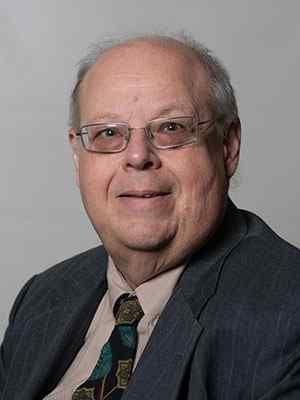
Nick Solomey, professor at the Farimount College of Liberal Arts and Sciences, looks for answers.
Faculty Bio:
Nickolas Solomey’s research is in the area of experimental particle and astroparticle physics, in the past he worked extensively on quark flavor physics by rare decays of hadrons, CP violation with Kaons, the study of nuclear states of matter and hadronic interaction physics. He was the co-spokesman of the Fermilab E907 experiment. He is also author of the book The Elusive Neutrino, and continues as editor of the Conference series on Hyperon, Charm and Beauty Hadrons, and has over 200 referred articles in physics research. His current experiments include neutrino experiments of NOvA and DUNE at Fermilab, and he is the PI of a new NASA project Neutrino Solar Orbiting Laboratory that aims to do unique neutrino science with a neutrino space-craft. Since 2018 he has been NASA Innovation Advanced Concept Fellow.
Transcript:
In 2016, I brought what many considered a “crazy” idea to NASA. It relates to neutrinos, which are mysterious subatomic particles that can go through matter as if it’s not there. Neutrinos should be massless, but we’ve proven they have mass. Most neutrino detectors are massive and experiments must be conducted underground. I suggested studying solar neutrinos, and noted that a small detector would be powerful enough to allow us to learn more about the solar neutrinos produced inside the Sun’s core.
At the time, NASA was preparing to launch a spacecraft that would travel close to the Sun. Named the Parker Solar Probe, it entered space in 2018 and is still making close passes by the Sun.
Solar neutrinos fly directly to and through the Earth at nearly the speed of light, and the number of these particles increases dramatically closer to the Sun—about 1,000 times higher at seven solar radii than at Earth. A detector placed there becomes effectively 1,000 times more powerful. Building a 250-killigram detector would result in, by far, the largest terrestrial solar neutrino experiment ever.
The detector would allow us to study the nuclear fusion core of the Sun in unprecedented detail, and to investigate neutrino properties in new ways, including measuring how solar neutrinos change with distance.
We’re now preparing to launch a .1 kg test detector into low-Earth polar orbit, with funding to operate it for one year. Ultimately, we hope to propose a small spacecraft carrying an approximately 250 kg detector close to the Sun. Operating for 5 to 10 years, such a mission would dramatically improve our understanding of the Sun’s fusion core—the source of the energy that sustains life on Earth.
Read More:


