


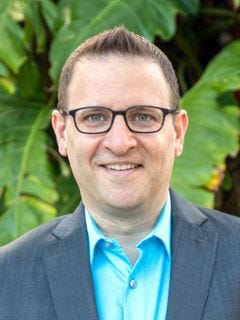
On University of Miami Week: Water insecurity is already affecting more people than previously thought.
Justin Stoler, professor in the Department of Geography and Sustainable Development, explores the quiet water crisis.
Faculty Bio:
Dr. Justin Stoler’s research explores urban health disparities using social, environmental, and spatial epidemiological methods. He is also affiliated with the Department of Public Health Sciences and the Abess Center for Ecosystem Science & Policy. Dr. Stoler enjoys field work and has worked in several countries—including a decade of experience in Accra, Ghana—exploring links between neighborhood structure, geodemographics, the environment, communicable diseases, and water insecurity. Dr. Stoler directs the Social & Health Inequities Research & Education (SHIRE) Lab, which provides research and professional development opportunities to students at all levels. His courses blend geospatial frameworks with contemporary population, environmental, and global health issues.
Transcript:
When most Americans think of water insecurity, they imagine crises in developing nations and assume that safe tap water is a given in the world’s wealthiest country. Our research tells a different story.
As a global water security researcher, my work focuses on measuring how communities interact with water. Scientists traditionally measured water security by looking at groundwater availability, reservoir levels, or piped water volumes. However, those metrics miss the human experience entirely. Years ago, I was part of a team that created the HWISE scale, a psychometric tool that measures how people experience water insecurity through physical burdens, such as being unable to wash your hands, and psychological distress, such as worrying about not having enough water. The HWISE scale improved our understanding of how water insecurity impacts households globally.
Now, I co-lead a team that created a new scale to measure household water insecurity in the United States. What we’re uncovering is a quiet crisis driven by environmental shocks to water systems, such as floods, fires, and freezes; new contaminants such as PFAS and microplastics; and declining public trust. Our data suggest that roughly one in five US households may experience at least low-level water insecurity.
We need to face several realities. First, national wealth does not guarantee water security; the struggle for water in America is more common than we realize and hurts national productivity. Second, the days of bountiful, cheap, clean water are behind us. But, third and most importantly, we have solutions, such as technology that improves water access and reliability, and payment models that make water more affordable. Our new metrics will help track progress in securing safe water for all Americans.


