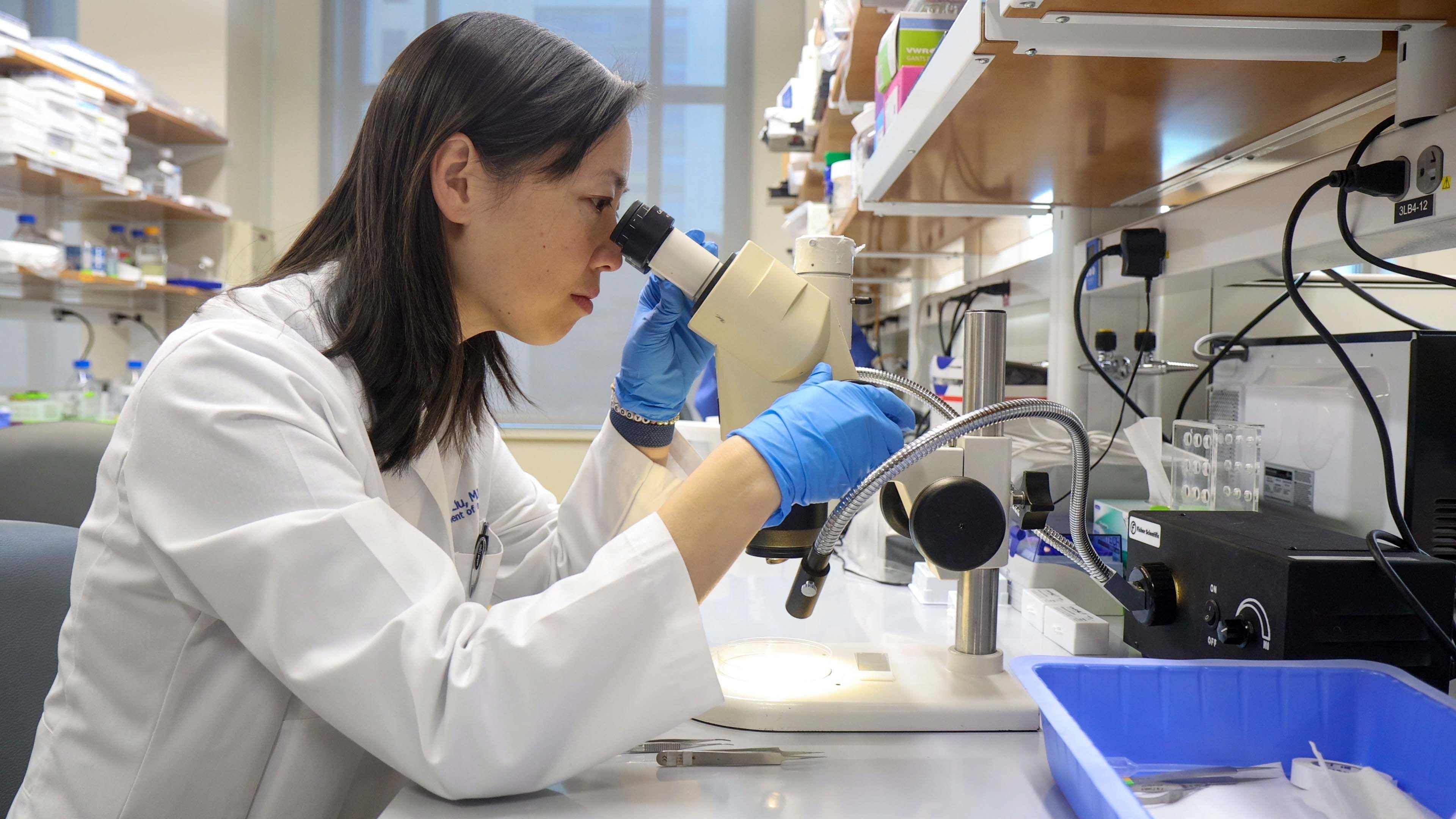

Immune cells play a key role in regulating eye pressure linked to glaucoma.
Katy Liu, associate professor of ophthalmology at Duke University School of Medicine, explores this connection.
Faculty Bio:
Dr. Katy Liu is an associate professor in the Department of Ophthalmology at the Duke University Eye Center. She is a board certified, glaucoma fellowship-trained clinician-scientist with a PhD in Cell & Molecular Physiology, and her primary focus is to make basic science discoveries that can be translated from the bench to glaucoma patients.
Transcript:
Glaucoma is a disease where the pressure in the eye is too high, and it is a leading cause of permanent vision loss. The issue in glaucoma is that the drain of the eye is dysfunctional and does not drain fluid normally from the eye. This leads to a build-up of pressure in the eye and results in vision loss. Most of our existing treatments for glaucoma do not target the drain of the eye where the issue lies. In our research, we examined at the drain of the eye and found immune cells in these drainage tissues. We found that they play a critical role in maintaining eye pressure.
Previous studies found that macrophages – the clean-up crew of the body – are found in the drainage tissues of the eye. Using modern immunology techniques, we were able to show that a specialized type of macrophage, called resident macrophages, live in the drainage tissues of the eye. These resident macrophages are important in housekeeping tasks in other tissues, so we asked whether they’re important in maintaining the normal drainage of fluid from the eye. We removed resident macrophages from drainage tissues in mice, and we found that this altered normal eye pressure. When we removed resident macrophages, eye pressure went up. Next, we asked how resident macrophages regulate eye pressure. We discovered that when we removed resident macrophages, the was a build-up of extracellular or scaffolding material in the drain of the eye, which increases resistance and pressure within the eye. Our study was the first to show that resident macrophages are important in maintaining normal eye pressure.
Glaucoma is a disease of aging, and there are changes to the immune system that occur with aging as well. Our next steps are to look for resident macrophages in human eyes and to determine how they act in eyes with glaucoma. Our goal in the future is to target these specialized immune cells with drug therapies to lower eye pressure and prevent vision loss in patients with glaucoma.
Read More:
[DukeHealth] - Immune Cells Play Key Role in Regulating Eye Pressure Linked to Glaucoma
[Immunity] - Resident tissue macrophages maintain intraocular pressure homeostasis