


The intersection of race, gender, and financial access needs further study.
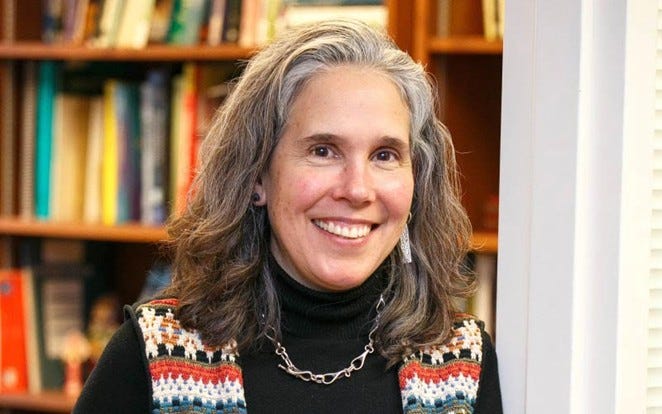
Carlena Ficano, professor of economics at Hartwick College, discusses why.
Faculty Bio:
Dr. Ficano’s areas of expertise include: labor economics, applied econometrics, social policy on low income family well-being, the economics of higher education and, most recently, local economic development.
Recent courses taught include:
Econometrics
The Marketplace
Microbes, Markets, and Food
Labor Economics
The Economics of Race and Gender
Principles of microeconomics
Her current research in collaboration with Lawrence Ogbeifun, assistant professor of economics at Hartwick College, https://www.hartwick.edu/people/lawrence-ogbeifun/ investigates barriers that women and racial minorities face in accessing small business loans. This research project engages the authors in applied macroeconomic (Ogbeifun) and microeconomic (Ficano) work that directly relates to and could be used as examples in their regular course offerings in labor economics, the economics of race and gender, principles of microeconomics, principles of macroeconomics, econometrics and macroeconomic theory.
Transcript:
Is it possible to quantify what is lost both by the entrepreneurs and by the larger society, when access to credit is limited by the intersection of one’s race and gender?
Small businesses success is a well-recognized driver of community well-being. But not everyone seeking to secure a small-business loan is viewed equally by lenders--and differential access to credit for minority and women entrepreneurs has the potential to impose significant constraints on local and regional economies.
My current research, conducted jointly with co-author Dr. Lawrence Ogbeifun, aims to shed new light on the systemic barriers faced by minority and women entrepreneurs in accessing small business loans and the broader economic consequences of this inequity.
Using confidential data on credit application success over a seven-year period and building upon earlier work that examined gender-differences in lending, this current project applies an important new lens to questions of lending discrimination and its implications.
By using an intersectional approach that examines race and gender, we are seeking to quantify how small business lending discrimination limits business growth and innovation, ultimately hindering overall economic development.
It is our hope that this work will contribute meaningfully to the field of economics and public policy by filling a gap in the literature around the intersection of race, gender, and financial access. Only empirical evidence can shape future lending practices aimed at promoting equity in small business finance—and this topic is relevant to a wide range of stakeholders, including policymakers, financial institutions, and advocacy groups working toward inclusive economic development.
This research is directly relevant to our teaching responsibilities in courses on labor economics, race and gender, and macroeconomic policy. The insights gained from this research will enhance the learning experiences of our students, encourage critical thinking, and contribute to academic discourse and hopefully drive new conversations on systemic inequities.


