


On Fralin Biomedical Research Institute Week: Early interventions are key for children with cerebral palsy
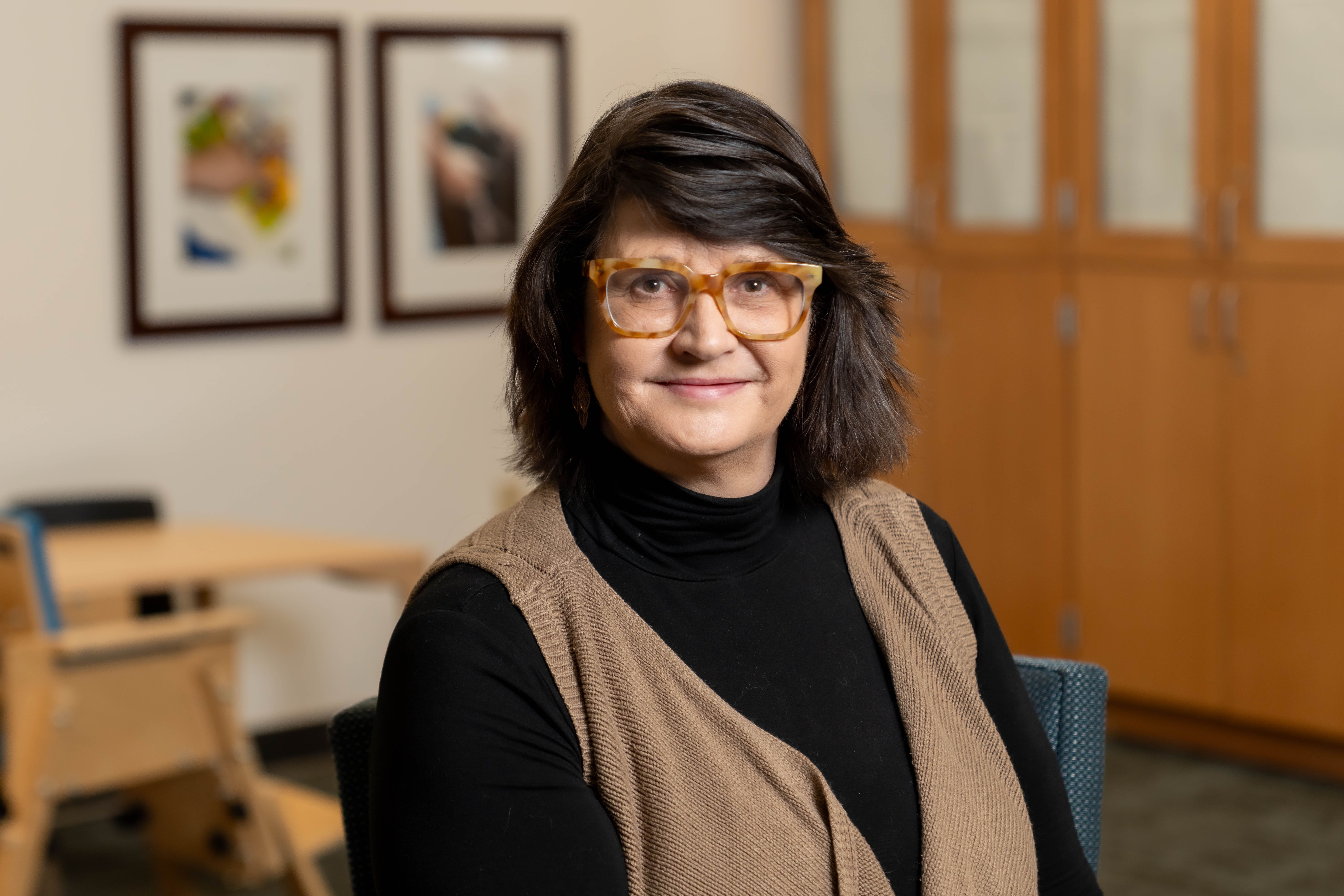
Stephanie DeLuca, associate professor and co-director at the Neuromotor Research Clinic, details why.
Faculty Bio:
Strokes are devastating events often associated with people over 65. But large numbers of infants have strokes, too, which can cause permanent neuromotor impairments. For more than 25 years, Stephanie Deluca, Ph.D., has studied how intensive neurorehabilitation treatments help children and adults with these impairments.
Dr. DeLuca has helped develop and rigorously test multiple neurorehabilitation therapy protocols and led numerous clinical research trials. Her interdisciplinary research efforts have included; engagement of families, international training, and innovative teaching to prepare the next generation of clinicians and scientists.
Dr. DeLuca has served as Co-PI on two NIH-funded multisite comparative effectiveness trials, and currently serves as a co-investigator and site- PI on the largest pediatric neurorehabilitation trial ever funded by the National Institutes of Health in the United States. In addition, she has served as a consultant for Humanity Inclusion funded by USAID and as a co-investigator on two global-health initiative grants funded by the Medical University of South Carolina. Dr. DeLuca envisions “precision rehabilitation treatments” that can help all individuals impacted by neuromotor impairments by combining knowledge from diverse disciplines & communities to develop new evidenced-based rehabilitation techniques world-wide.
Dr. DeLuca believes that research should serve to empower the individuals, families, and communities impacted by disability and seeks to use research to complete this goal. Dr. DeLuca has also served as a national leader by serving as a Director at Large on the Board of Directors for the American Academy of Cerebral Palsy & Developmental Medicine (AACPDM) and previously chaired the Advocacy Committee for this organization and on the Treatment Outcomes Committee. Currently, she serves on the Care Pathways Committee for AACPDM. Before joining Virginia Tech, Dr. DeLuca was a faculty member in the department of Occupational Therapy at the University of Alabama at Birmingham, where she worked to train the next generation of therapists to be both clinicians and scientists.
Transcript:
Cerebral palsy is a neurological condition that affects how the brain controls muscles, often limiting movement on one side of the body. For many children, this can lead to lifelong challenges with arm and hand function.
Early intervention is especially important because the brain is highly adaptable during the first two years of life. During this period, the nervous system is particularly responsive to learning and experience, creating an opportunity to support motor development.
Our research examined how different early therapies might help infants and toddlers with unilateral cerebral palsy improve their arm and hand function. In the Baby CHAMP study — short for the Baby Children with Hemiparesis Arm-and-Hand Movement Project — we compared three therapist-delivered interventions designed to encourage movement and skill development.
Two of the therapies used constraint-induced movement approaches. These methods limit the use of the stronger arm so the child practices using the weaker one during therapy activities. The third approach focused on bimanual therapy, which encourages children to use both hands together.
Children between 6 and 24 months old participated in the study and received intensive, play-based therapy for three hours a day, five days a week, for four weeks.
The results showed that children improved their hand and arm function on both arms across all three approaches. Whether therapy involved a cast, a splint worn during sessions, or no constraint at all, the gains were similar.
These findings suggest that early, intensive therapy can help infants and toddlers build critical motor skills and that families and clinicians have multiple effective options during an important window of brain development.
Read More:
[Virginia Tech] - Intensive therapy approaches show benefits for infants and toddlers with cerebral palsy


