


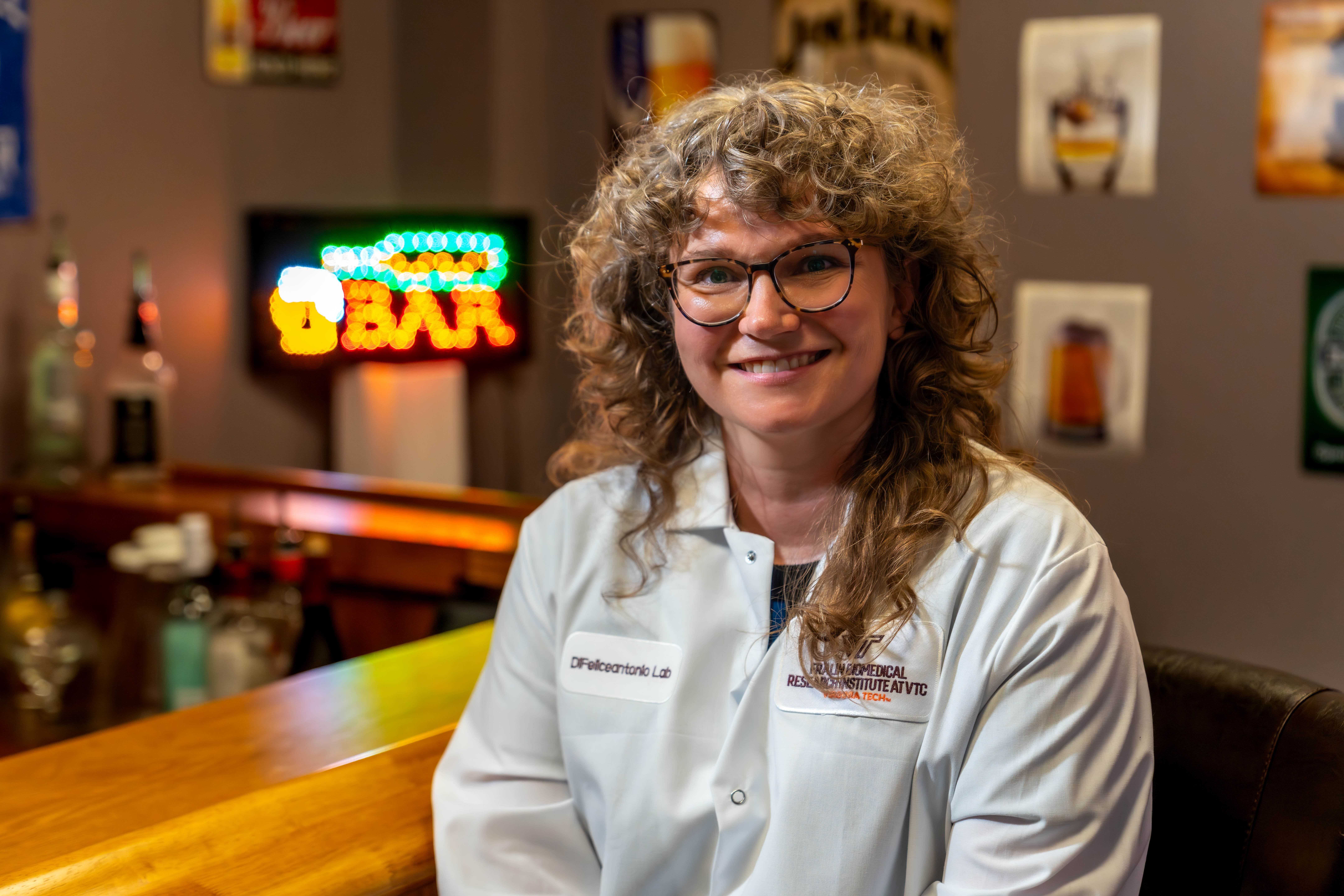
On Fralin Biomedical Research Institute at Virginia Tech Week: Can weight loss drugs help reduce alcohol use?
Alex DiFeliceantonio, Assistant Professor and Interim Co-director of the Center for Health Behaviors Research, looks into this.
Faculty Bio:
Alexandra DiFeliceantonio, Ph.D., is an appetitive neuroscientist who studies how the brain integrates peripheral signals to guide food selection and eating behaviors. Using multimodal brain imaging and metabolic measures, her laboratory in Roanoke studies food motivation to ask new questions about diet, food choice, and addiction.
While completing a bachelor’s degree in psychology at Sweet Briar College, she became interested in reward learning and motivation. This led her to pursue a master’s degree and doctorate in biopsychology from the University of Michigan, where she studied how opioids alter motivation in animal models. During her postdoctoral training at Yale University and the Max Planck Institute for Metabolism Research in Germany, Dr. DiFeliceantonio examined the role of post-ingestive dopamine signaling in eating behavior and food choices.
Transcript:
More than half of U.S. adults drink alcohol, and about one in ten meets criteria for alcohol use disorder. Current medications that reduce drinking act directly on the brain. But our work tested a different mechanism.
We studied people taking GLP-1 receptor agonists — drugs widely prescribed for diabetes and weight loss. These drugs are known to slow how quickly the stomach empties. We asked: could that also slow alcohol’s path into the bloodstream?
Participants taking GLP-1s and those not on the drugs each consumed the same standardized dose of alcohol. We measured breath alcohol concentration, blood pressure, blood glucose, and asked participants to report their cravings and level of intoxication.
Despite drinking the same amount, those on GLP-1s showed a slower rise in breath alcohol concentration. They also reported feeling less intoxicated on questions such as “How drunk do you feel right now?”
This delayed absorption matters because faster delivery of a drug increases its abuse potential. By slowing alcohol’s effects, GLP-1s may reduce both the subjective appeal of drinking and the physiological impact on the body.
Our findings suggest that these medications could play a role in reducing alcohol use — not by altering brain reward circuits directly, but by changing how the body processes alcohol.
While this was a small pilot study, the results highlight a promising new direction: repurposing an existing class of safe, widely used drugs to help people who want to cut back on drinking.
Read More:
[Virginia Tech] - ‘How drunk do you feel?’: Ozempic, Wegovy may help reduce alcohol use


