


Choosing between collecting fingerprints or the DNA is often a decision crime-scene investigators must make; but why can they not get both?
Carol Ritter, senior instructor in the Forensic Science Program at Cedar Crest College, says a new method may help fix this problem.
Faculty Bio:
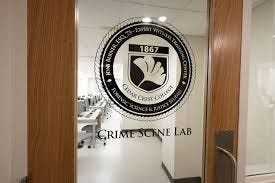
Carol Ritter is a full-time senior instructor in Forensic Science Program in the Chemical, Physical, and Forensic Sciences Department at Cedar Crest College in Allentown, Pennsylvania, where she also serves as the assistant director of the college’s Joni Berner Expert Witness Training Center and Crime Scene Lab.
Ritter teaches undergraduate and graduate-level courses in pattern evidence, DNA analysis, forensic biology, bloodstain pattern reconstruction and crime scene reconstruction. She began her career in 1997 with the Pennsylvania State Police Crime Laboratory, analyzing controlled substances, sexual assault, homicide cases, and bloodstain patterns. Certified by the American Board of Criminalistics, Ritter has testified over 50 times at the state and federal levels. She previously served as technical coordinator for the PSP serology section, auditing state labs and training law enforcement personnel.
Since joining the Berner Center, she as mentored students and taught courses in forensic pattern analysis, DNA analysis, and crime scene reconstruction. Her applied research focuses on bloodstain patterns, firearm-related patterns, and DNA analysis, bridging laboratory science with real-world forensic practice.
Cedar Crest College’s Joni Berner, Esq. ’75 Expert Witness Training Center and Crime Scene Lab provides real-world environments where first responders, legal professionals, and community partners can strengthen their skills in evidence preservation, courtroom testimony, and crime-scene investigation. The state-of-the-art facility features realistic spaces for training, practice, and collaboration, and has been designed to meet a critical justice-system need: preparing professionals to handle crime scenes and deliver courtroom testimony with confidence, accuracy, and integrity.
Transcript:
Anyone who has watched a crime-scene investigation on TV understands the importance of obtaining fingerprints and DNA when gathering evidence. What doesn’t often make it to the screen are some behind-the-scenes dilemmas about how to approach evidence containing both fingerprinting and DNA collection.
That’s because once fingerprint analysis is complete, DNA is typically collected from fingerprints by swabbing with water —but when Super Glue is used to enhance a print, the result is an excellent fingerprint, but DNA is trapped under the glue so swabbing with water often results in little to no DNA. In my lab, we are developing a chemical reagent that will help crime-scene investigators have it both ways – they would be able to perform a fingerprint and DNA comparison to help solve crimes more effectively.
DNA is considered to be the holy grail of crime-scene evidence. But that’s not always true--because, to have your DNA available in a database, usually you have to be charged with a felony. That’s not the case with fingerprints, which can be more widely available. Investigators usually get more hits or more understanding of who committed a crime based on a fingerprint database.
Our research explores a new method to cut through the glue with a reagent we’ve developed, enabling you to get a full DNA profile along with the fingerprint.
Choosing whether to collect DNA from a fingerprint or to just go for the print—and risk losing evidence during collection--represents a frustrating compromise for crime-scene investigators and labs. And it can limit the scope of an investigation.
As a forensic investigator, do you want to analyze the fingerprint or do you want to be able to do DNA analysis?
When our work is complete, investigators may no longer need to make that choice.
Read More:


