


Can artificial intelligence help us detect brain cancer early?
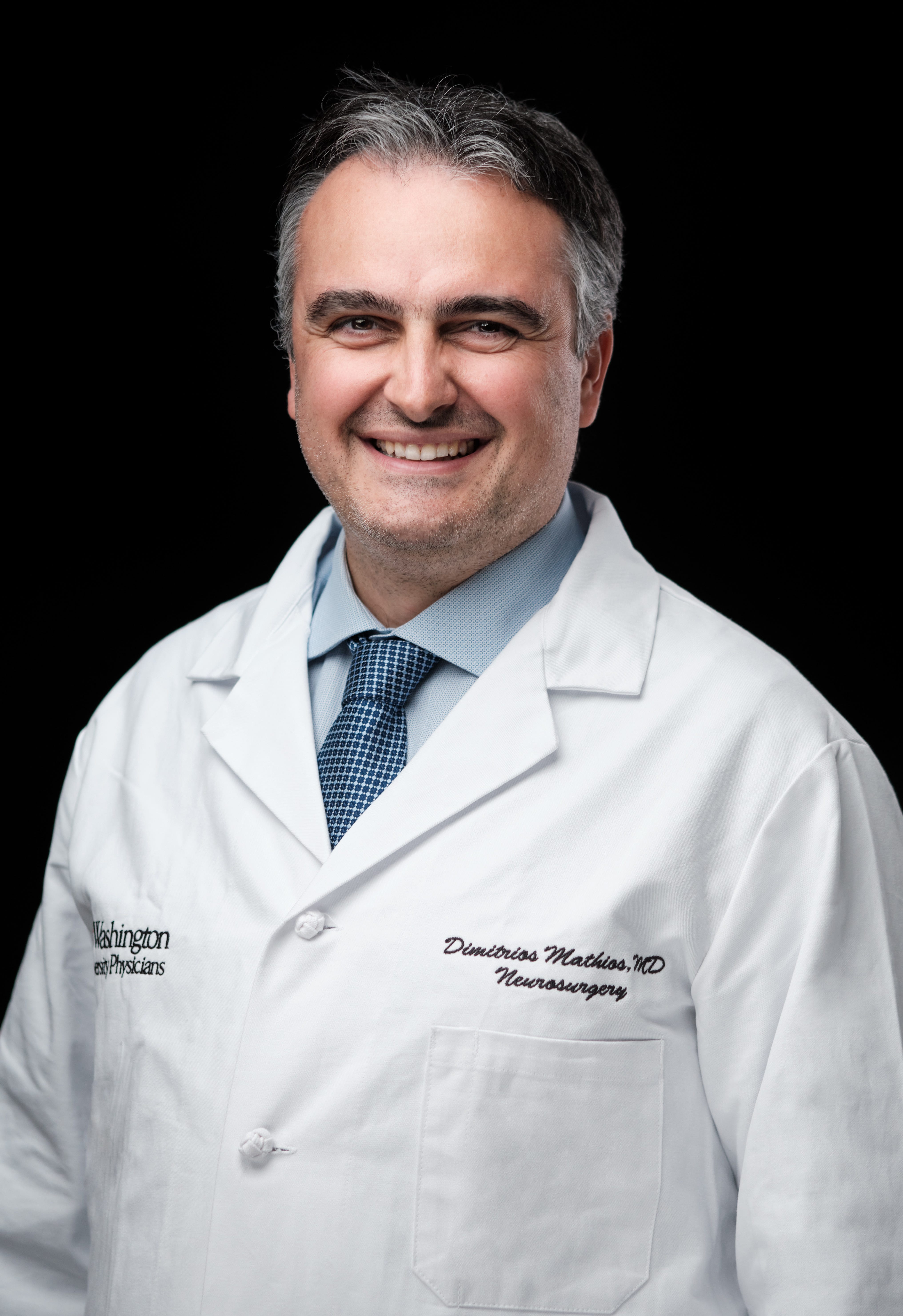
Dimitrios Mathios, assistant professor of neurosurgery at Washington University in St. Louis, takes a non-invasive look.
Faculty Bio:
Dimitrios Mathios, MD, is an assistant professor of neurosurgery and director of the Molecular Neuro-oncology Lab at WashU’s School of Medicine. His research focuses on using cancer immunology, genetics, and epigenetics to develop non-invasive early detection of brain tumors, when they are easily removable or curable with other treatments.
Dr. Mathios has published more than 50 peer-reviewed articles in journals like Nature Genetics, Nature Communications, Science Translational Medicine, Cancer Discovery, the Journal of Neurosurgery, the Journal of Neuro-Oncology, and Neurosurgery. His work has resulted in numerous awards, including the Young Investigator Physician Scientist Research Award at John Hopkins University School of Medicine, where he completed his residency, in 2022, and the American Association for Cancer Research-Conquer Cancer Foundation’s ASCO Young Investigator Award for Translational Cancer Research in 2020.
Transcript:
Diagnosing brain cancer at its earliest stages, like any cancer, is critical. But there are currently no screening methods available to detect brain cancer before a patient becomes symptomatic, or when the symptoms are as commonplace as a headache or slight personality change. As a result, brain cancer often goes undetected when treatment is the easiest, most effective, and least risky.
That’s why, in 2019 I began researching a way to develop a noninvasive, blood-based test for early detection of brain cancer.
Medical researchers have been looking for and finding ways to detect different kinds of cancer through blood-based tests for more than 15 years. They do this by identifying markers or other abnormalities in the blood that signal the presence of cancerous cells.
But brain cancer is one of the most challenging cancers to detect in the blood. This is because the blood-brain barrier, a layer of cells that protects the brain from toxins and pathogens in the blood, prevents cancer markers from entering the bloodstream in as high concentrations as in other cancers. For this reason, detection of brain tumors requires developing more sensitive approaches for biomarker detection.
This year, we reached a significant milestone in our research. We found that we could use artificial intelligence to analyze DNA fragments in the bloodstream for evidence of brain cancer. With this approach, we successfully detected brain cancer in about 75% of a cohort of more than 500 patients.
The next step is to conduct a larger trial to confirm our findings in a broader population. Our end goal? To create a reliable test that emergency room doctors and primary care physicians can use when patients come to them with subtle, non-specific neurologic symptoms, giving those patients a quicker diagnosis and a better chance of survival.
Read More:
[Cancer Discovery] - Detection of Brain Cancer Using Genome-wide Cell-free DNA Fragmentomes


