


Capping out-of-service oil wells can be expensive, but is there a better way to do so?
Mark Mba-Wright, professor of mechanical engineering at Iowa State University, looks into biofuels as a solution.
Mark Mba-Wright is a professor of mechanical engineering at Iowa State University. His research focus is sustainable energy systems, including techno-economic analysis, lifecycle assessment and process optimization.
What if an often-overlooked danger that lingers after fossil fuel wells are done pumping could be mitigated by a sustainable, bio-based oil that returns carbon back underground?
Across the U.S., there are hundreds of thousands of oil wells no longer in service. These miles-deep shafts pose emissions and safety risks, but they’re expensive to cap, up to $1 million per well. At the same time, numerous plant-based waste products are underutilized. Think of the woody debris culled from forests to lessen wildfire risks, or the stalks and cobs left behind after a corn field is harvested.
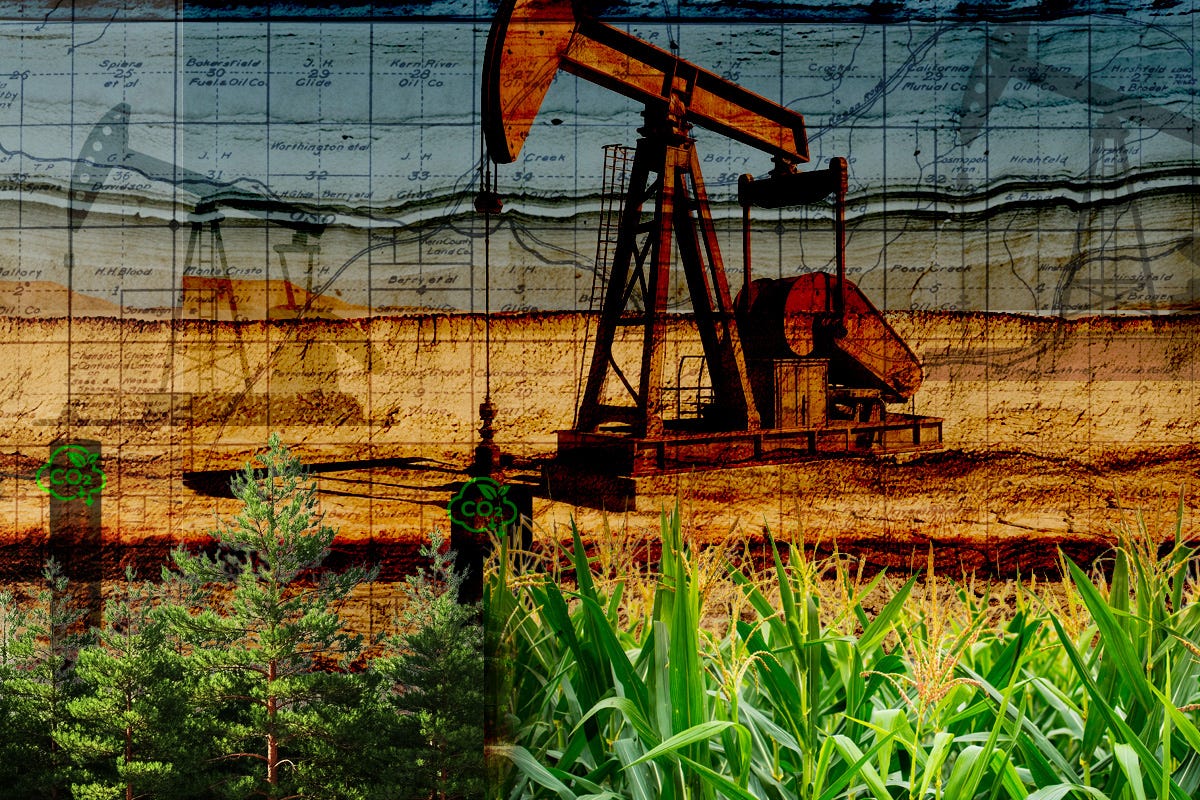
These biomass materials can be used to make a dense, carbon-rich bio-oil with fast pyrolysis, a process of transforming biological matter into liquid by exposing it in an oxygen-free environment to a few seconds of high heat – temperatures that can exceed 1,000 degrees Fahrenheit. Injecting that bio-oil into orphaned crude oil wells could both cap the wells and act as a form of carbon capture. It’s an opportunity to match an abundant resource with an urgent demand, and it’s already in limited commercial use.
When the research team I lead studied the emerging practice, our models showed a network of 200 mobile bio-oil production facilities could offer an economically and technically feasible expansion of the technology. The proposed system could sequester carbon dioxide for an estimated $152 per ton, making it competitive with the dominant method of removing atmospheric carbon, a technology called direct air capture that requires far more upfront investment.
Our research shows a pyrolysis-based bio-oil sequestration system holds great potential, offering a decentralized, smaller-scale path to carbon capture that also provides other associated benefits. Carbon removal is an important way to address climate change, but it doesn’t need to be an either/or proposition.
Read More:
[Iowa State] - Bio-oil made with corn stalks, wood debris could plug orphaned fossil fuel wells


